FOCA Highlight Showcase seal

University of the Pacific · Holt-Atherton Special Collections

The Mountains
Are Calling

The John Muir Collections · 1838–1914

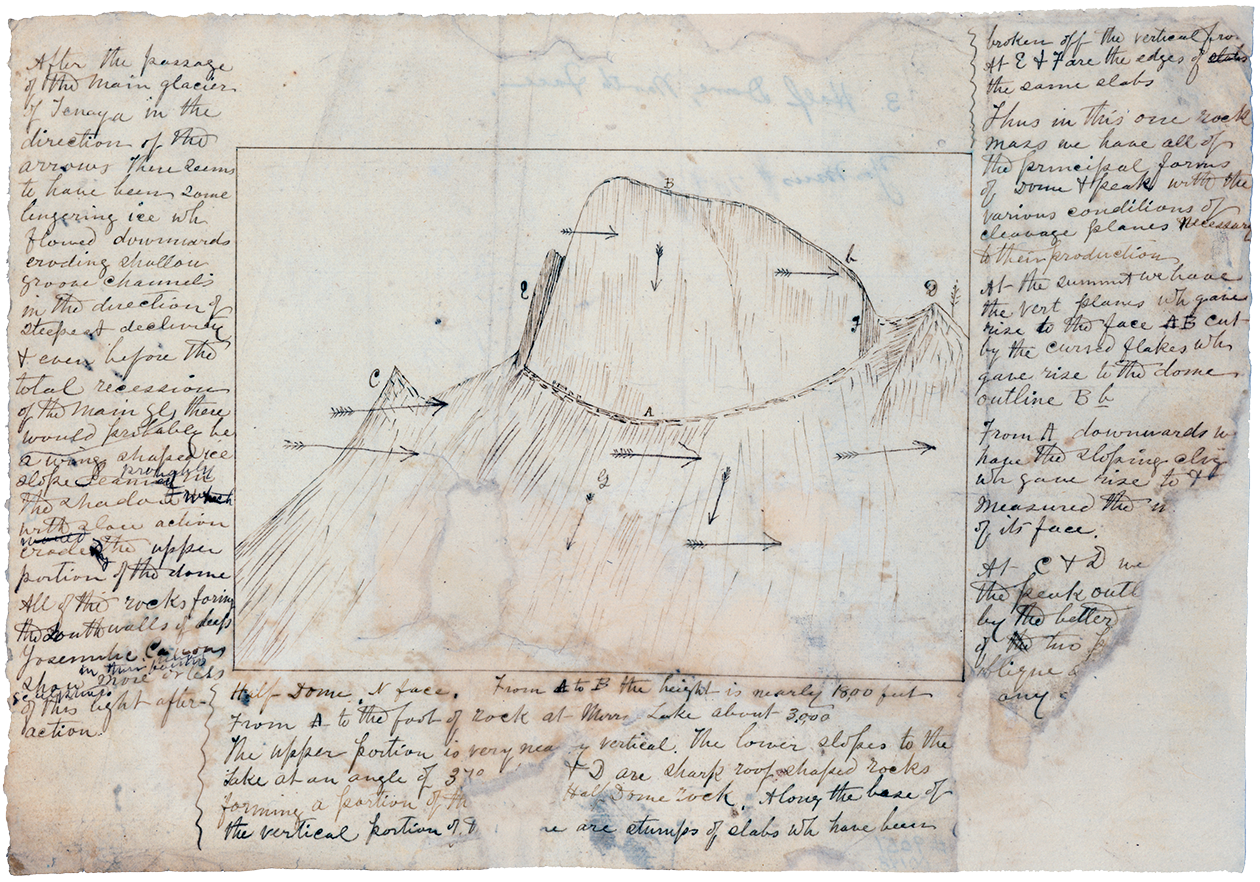
Muir theorized that glaciers, not earthquakes, carved Yosemite Valley — and scraped the granite as in his c.1872 drawing of Half Dome, shown here. University of the Pacific, © 1984 Muir-Hanna Trust

Examine the sketch

The Collection

The World’s Largest Muir Archive


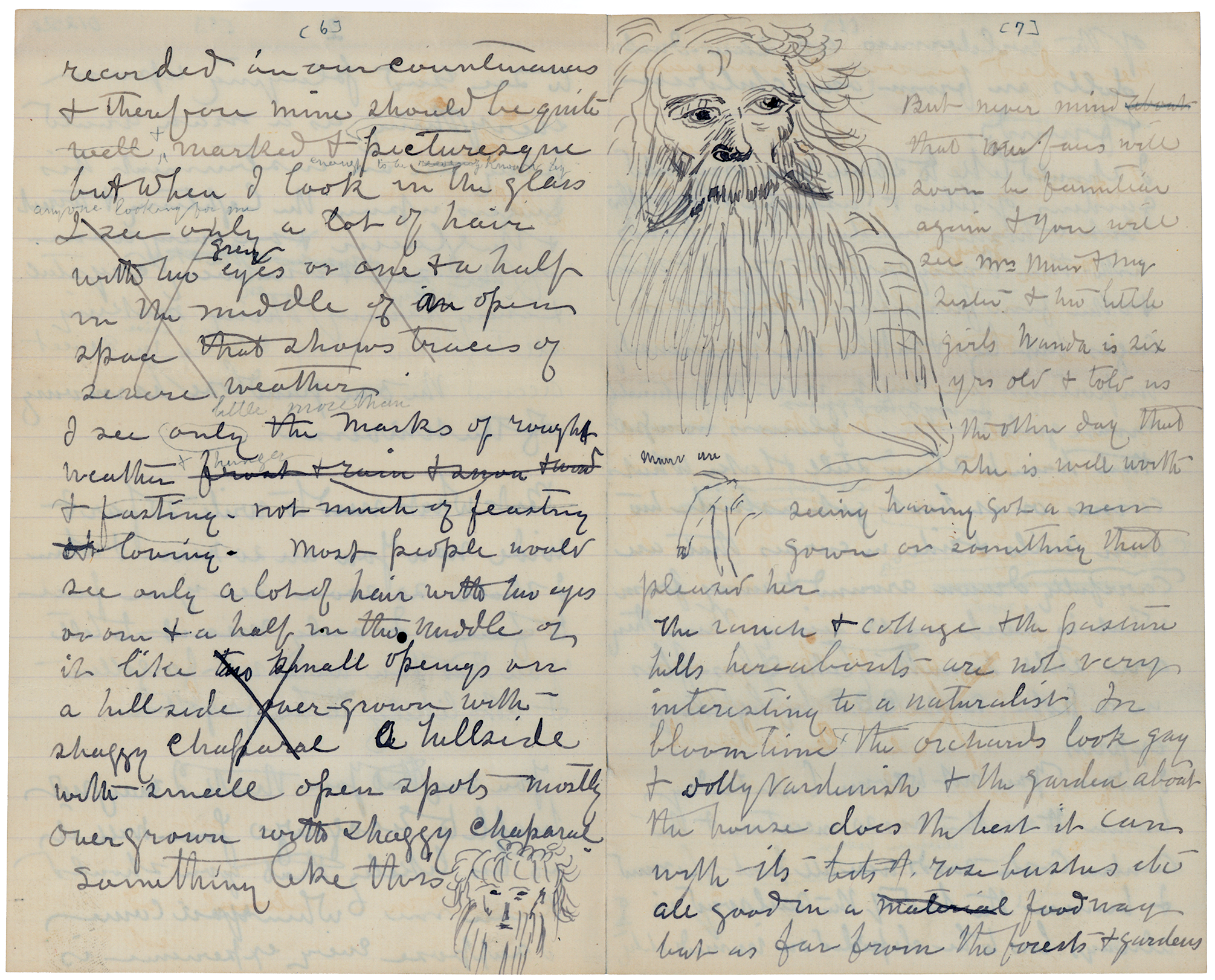
John Muir's 1887 pen self-portrait sketched in the margins of a handwritten letter.
Muir was living in Martinez in 1887 when he sketched this self-portrait and wrote, “when I look in the glass, I see but little more than the marks of rough weather and fasting.” University of the Pacific, © 1984 Muir-Hanna Trust

There are about a dozen places in California named for John Muir, and more — like Yosemite — that are synonymous with the famed naturalist and father of the National Parks.

The University of the Pacific in Stockton curates the largest collection of Muir materials in the world and opens many doors into his life and work: his letters, journals, and articles, most of them transcribed for easy searching online.

Collection
The John Muir Papers
Repository
Holt-Atherton Special Collections & Archives
Era
1838–1914
Scope
Letters, journals, drawings, articles, personal library & furniture
Access
Online, and on-site in Stockton by appointment

Historical Significance

From the University of the Wilderness


John Muir was born in Scotland in 1838, his family emigrating to Wisconsin when he was eleven. He briefly attended the University of Wisconsin before setting off for what he called the “University of the Wilderness.” Arriving in San Francisco in 1868, he quickly sought out “any place that is wild,” and went to Yosemite.

There he kept journals filled with drawings, corresponded with family and friends, and wrote articles about the beauty and science of the glacier-carved Sierra Nevada. Where earlier geologists imagined Yosemite Valley born of cataclysmic earthquakes, Muir theorized that glaciers had shaped it — a reading recorded in the sketches and field notes now held at Pacific.

Muir also met Indigenous people who had been reduced to a meager existence by settlers long before he arrived. His writings carry brief, sparse, and derogatory passages about them and their “degraded” condition — a part of the record the archive preserves rather than obscures. Elsewhere he admitted that “to prefer the society of squirrels and woodchucks to that of our own species must surely be unnatural.”

Muir wanted to “preach the green brown woods to all the juiceless world.” He set his mind to preserving nature, helping to establish and expand many national parks and monuments. He fought to stop a dam in Yosemite National Park meant for San Francisco’s water supply. San Francisco prevailed, and the Hetch Hetchy Valley was flooded — but the loss became one of the founding griefs of the American conservation movement.


Dam Hetch Hetchy! As well dam for water-tanks the people’s cathedrals and churches.
John Muir

The People Behind the Collection

A Life in the Sierra


1838 – 1914

John Muir


  • 1838Born in Scotland
  • 1849Family emigrates to Wisconsin
  • 1868Arrives in San Francisco; seeks “any place that is wild” and goes to Yosemite
  • c.1872Sketches Half Dome, advancing his glacial theory of the valley
  • 1876Drafts his first attempt at an autobiography
  • 1887Living in Martinez, sketches a self-portrait
  • 1910John and Louie have ten grandchildren
  • 1914Dies, having reshaped how a nation sees its wild places
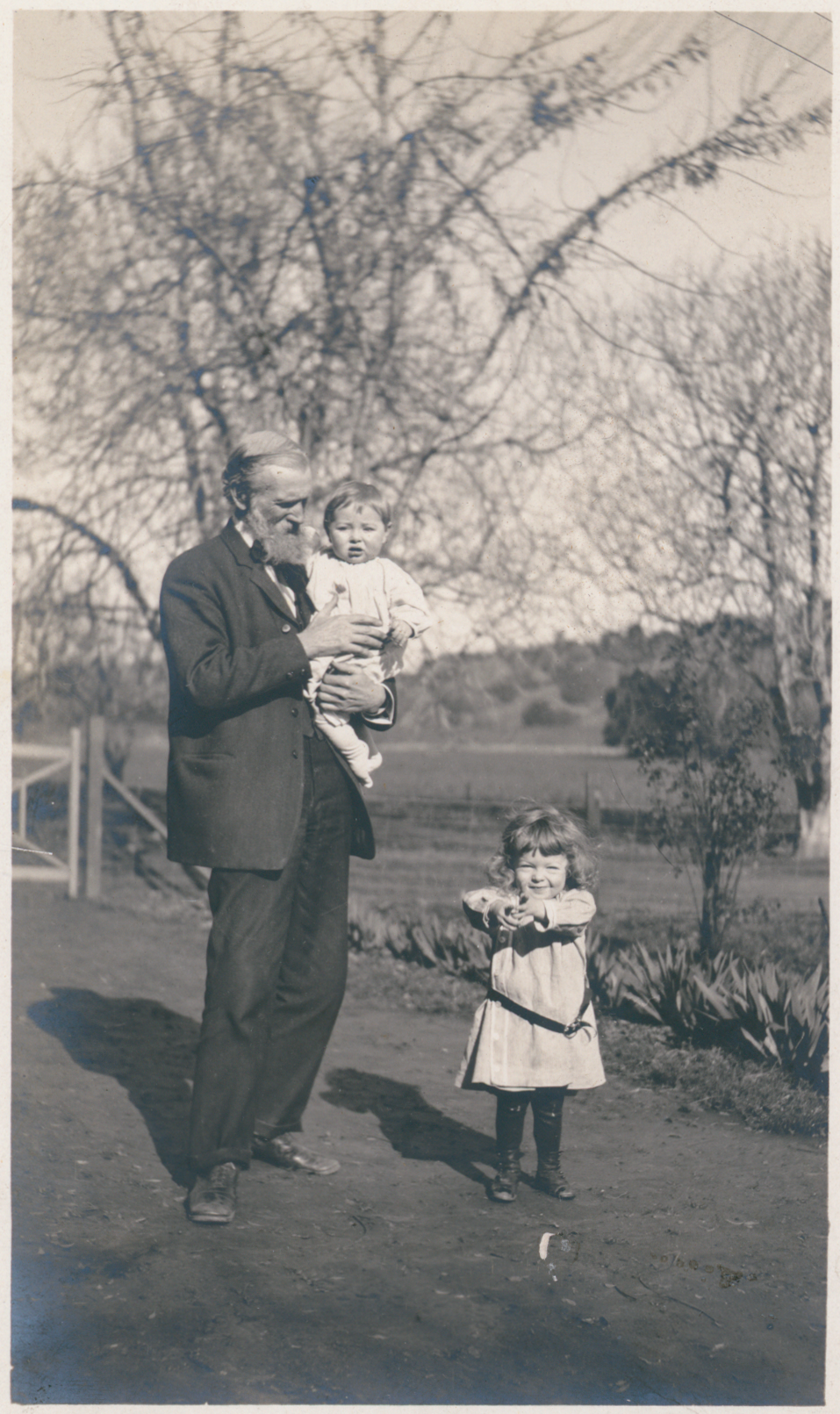
An elderly John Muir holding an infant grandchild while a young girl stands beside him in the ranch orchard.

The Martinez ranch was Muir’s home for most of his California life. He and his wife Louie had two daughters and, by 1910, ten grandchildren — among them John Muir Hanna and Strentzel Hanna. University of the Pacific, © 1984 Muir-Hanna Trust

Within the Collection

Letters, Journals, and a Life’s Work


Correspondence

Letters

Decades of letters to family and friends, tracing Muir’s wanderings, campaigns, and affections in his own hand.

Field Notebooks

Journals & Drawings

Journals filled with sketches and observations of the glacier-carved Sierra — science and beauty recorded together.

Manuscripts

Articles & Writings

Drafts and published articles arguing the case for wilderness, including his first attempt at an autobiography.

The Muir Experience

Personal Library

Muir’s own books, complete with his original annotations, recreated in the university library.

Realia

Furniture & Objects

Furniture from Muir’s Martinez home, bringing the setting of his California years into view.

Digital Access

Digitized Records

Most material online is transcribed for easy searching, so researchers anywhere can work with the collection.

All things Muir can be found at pacific.edu/muir, and every digitized record can be searched at Scholarly Commons. Visitors are also welcome at the Holt-Atherton Special Collections and Archives — preferably by appointment — to work directly with the John Muir collections.

Contributing Institution

University of the Pacific


University of the Pacific — 175 Years of Innovation, 1851–2026.

Stockton, California

Pacific curates the largest collection of Muir materials in the world and shares it through classes, books, and presentations. The university library houses the Muir Experience — his personal library, complete with original annotations, alongside furniture from his Martinez home.

In April 2027, Pacific will host the Muir Symposium, where scholars will explore many aspects of Muir and the environmental movement. Contact Pacific at 209.946.2404 or archives@pacific.edu for more information.

209.946.2404  ·  archives@pacific.edu

All images: University of the Pacific, © 1984 Muir-Hanna Trust