
Californian of the Month
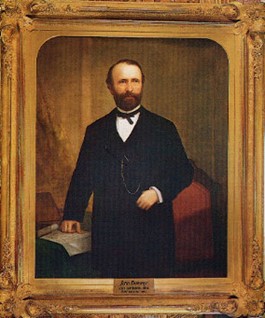
JOHN DOWNEY
Photo courtesy of the California Digital Library / Public Domain
JOHN DOWNEY
John Downey was the first foreign-born governor of California, having immigrated to the U.S. from Ireland at the age of 14 in the early 1840s.
After settling in Maryland, and then working as a druggist in Ohio, Downey followed the western movement to California during the Gold Rush.
Following a brief stint mining for gold in Grass Valley, he moved to San Francisco, then Los Angeles.
His rise in politics was meteoric: he was elected to the Los Angeles Common Council (the forerunner of the LA City Council), then the State Assembly, followed by the office of lieutenant governor. A mere five days after being inaugurated, Downey became governor after incumbent Milton Latham resigned to assume a seat in the U.S. Senate, which was vacated when Sen. David Broderick was killed in a duel.
Downey is chiefly known for his veto of the “Bulkhead Bill,” which would have allowed monopolistic control over San Francisco’s waterfront.
During his two-year term as governor, construction began on the California State Capitol in Sacramento and the Central Pacific Railroad (CPRR) was formed.
As the Civil War raged, Downey raised a regiment from California that fought for the Union.
Downey was succeeded as governor by Leland Stanford, the Central Pacific’s president, who used the levers of political power to boost the financial fortunes of the CPRR.
After public service, Downey retired to Los Angeles and founded the city’s first organized banking firm.